
我有一個很要好的女性朋友,當她準備出國唸書、正在整理行李時,特地在箱子裡塞進了一件旗袍。有趣的是,她在台灣生活了二十幾年,從來沒有在日常生活中穿過這件衣服。但在那一刻,她覺得這件旗袍是唯一能代表她來自哪裡、代表她文化根源的物件。這或許是許多現代台灣女性對旗袍的潛在情感:平日裡它看似遙遠,但在某些時刻,它是身份的重量,也是一種無須言語的文化自信。
I have a very close female friend. When she was packing her luggage to study abroad, she specifically made room for a Cheongsam. Interestingly, she had lived in Taiwan for over twenty years and had never worn it in her daily life. Yet, at that moment, she felt that this dress was the only object that could truly represent where she came from and her cultural roots. This perhaps reflects the latent sentiment many modern Taiwanese women have towards the Cheongsam: it seems distant in everyday life, but in certain moments, it carries the weight of identity and an unspoken cultural confidence.
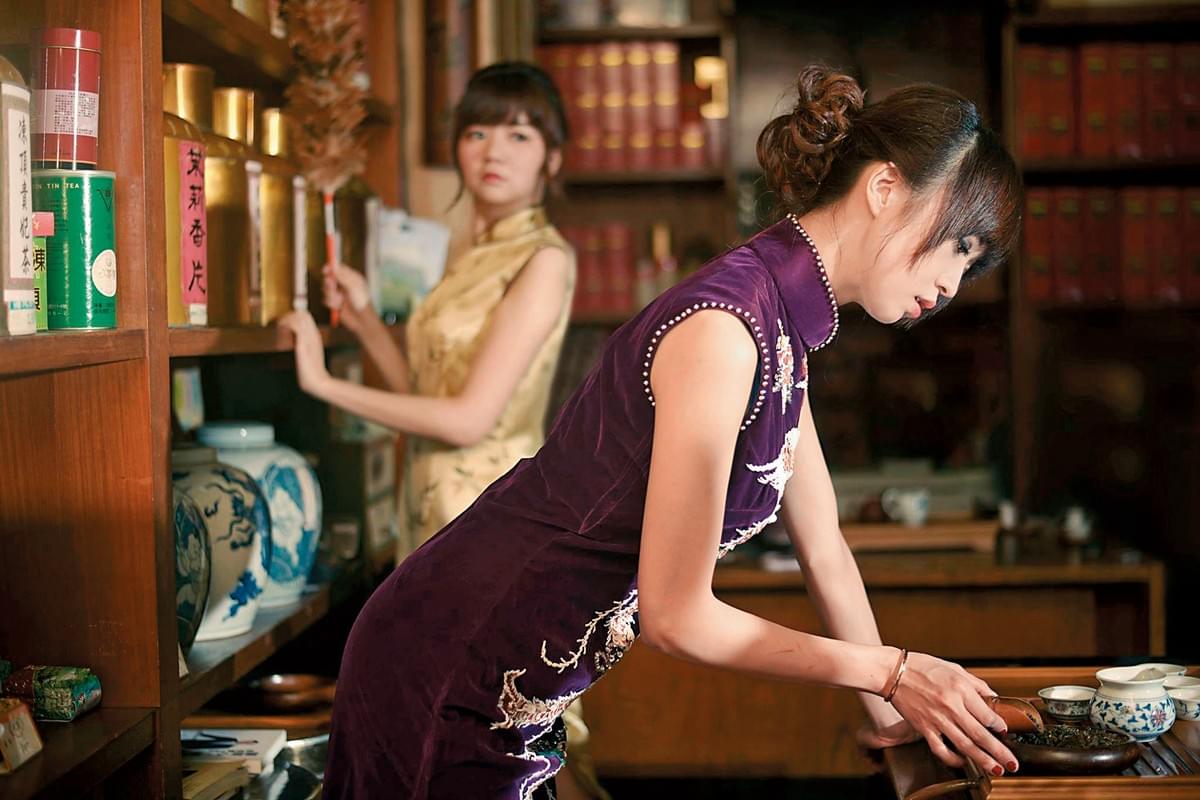
旗袍的歷史:從達觀顯貴到酒家文化
旗袍(Cheongsam 或 Qipao)不僅是一件服飾,它是華人世界近百年女性文化與社會地位變遷的縮影。當它在 1949 年後隨著移民來到台灣,落地生根,便發展出一段獨特而複雜的在地故事。最初,它是達觀顯貴的女人在社交場合中的標準服飾。對於那些跟隨國民政府來台的官夫人、名媛來說,旗袍是身分的象徵,代表著一種華人傳統的優雅與文化正統。
The Cheongsam (or Qipao) is not just a garment; it is a microcosm of nearly a century of female culture and social transformation in the Chinese-speaking world. When it arrived in Taiwan with immigrants after 1949, it took root and developed a unique and complex local narrative. Initially, it was the standard attire for distinguished women in social settings. For the wives of officials and socialites who came to Taiwan with the Nationalist government, the Cheongsam was a marker of status, representing a traditional elegance and cultural orthodoxy of their heritage.
值得一提的是,許多官夫人當年渡海來台時,行囊中特地帶著故鄉的珍貴布料。她們將這些承載著記憶的絲綢交給台北的裁縫師,縫製成一件件旗袍。這不僅是為了美,更是為了將對故土的思念穿在身上,讓那份遙遠的記憶在異鄉延續。然而,在台灣的風土與社會環境影響下,旗袍的風格也發生了微妙的改變:為了適應亞熱帶的濕熱氣候,袖長和領高開始降低,面料變得更輕薄透氣。
It is worth mentioning that many wives of high-ranking officials brought precious fabrics from their hometowns when they crossed the sea to Taiwan. They entrusted these silks, laden with memories, to Taipei's tailors to be crafted into Cheongsams. This was not just for beauty, but a way to wear their nostalgia for their homeland, allowing those distant memories to live on in a new land. However, under the influence of Taiwan's climate and social environment, the style subtly evolved: sleeve lengths and collar heights were reduced, and fabrics became lighter and more breathable to adapt to the subtropical heat.
更值得探討的是,旗袍在台北的社會意義具有雙重性。在 1960 至 1980 年代,它除了是名門閨秀的標配,也成為了台北酒家小姐的「制服」。在中山區的條通巷弄裡,旗袍以其修飾身形的特性,成為夜場文化的標誌。這種並存的現象,讓旗袍在台灣的社會語境中,同時承載了「高雅」與「曖昧」兩種極端的文化意涵。
More intriguingly, the Cheongsam's social meaning in Taipei became complex. From the 1960s to the 1980s, besides being the standard for high-society women, it also became the "uniform" for hostesses in "alcohol houses". In the alleys of Zhongshan's Tiaotong district, the Cheongsam, with its body-fitting style, became a symbol of the nightlife culture. This coexistence meant that the Cheongsam in the Taiwanese social context carried both the extreme cultural connotations of "elegance" and "ambiguity."
優雅的代價:關於限制的美學
有人說,穿上旗袍之所以會顯得特別優雅,是因為它的剪裁限制了妳的動作。當妳扣上領口的盤扣,腰身被布料緊緊包覆時,妳不可能大步流星地走路,也不可能頹廢地彎腰駝背。妳被迫放慢呼吸,挺直脊樑,每一個動作都必須小心翼翼。雖然這聽起來像是舊時代對女性身體的一種壓榨與規訓,但不可否認,這也是一種古典的美學形式。它強迫穿著者進入一種特定的節奏,一種專屬於東方女性的慢條斯理與端莊。這種「因為受限而優雅」的特質,正是旗袍最迷人也最令人深思的地方。
Some say that the reason one looks exceptionally elegant in a Cheongsam is that its tailoring restricts your movement. When you fasten the frog buttons at the collar and your waist is tightly wrapped in fabric, you cannot stride taking large steps, nor can you slouch. You are forced to slow your breathing, straighten your spine, and be mindful of every movement. Although this sounds like a form of suppression and discipline imposed on the female body in the old era, it is undeniably a form of classical aesthetics. It forces the wearer into a specific rhythm, a slowness and dignity exclusive to Oriental women. This quality of "elegance through restriction" is the most fascinating and thought-provoking aspect of the Cheongsam.
旗袍的現況:正在凋零的國寶手藝
到了現代,旗袍已不再是台灣的主流服飾,慢慢被年輕世代所遺忘。那些能夠做出完美合身旗袍的老師傅,大多是當年跟隨政府來台的裁縫師,他們掌握了「立體剪裁」與「一體成型」等傳統手藝,但如今這門手藝正面臨著嚴重的凋零。然而,對於想要體驗這份東方優雅的國際旅客來說,台北仍然是全球少數能找到高品質手工旗袍的地方:
In the modern era, the Cheongsam is no longer mainstream Taiwanese attire and is slowly being forgotten by the younger generation. The master tailors capable of producing perfectly fitted Cheongsams are mostly the artisans who came to Taiwan in 1949. They possessed traditional skills like "three-dimensional cutting" and "one-piece forming," but this craft is now facing severe extinction. However, for international travelers who wish to experience this Oriental elegance, Taipei remains one of the few places in the world where high-quality handmade Cheongsams can be found:
極致工藝的守護者:漢清旗袍 (Han Ching Cheongsam)這是一間位於西門町附近的傳奇老店,也是許多政商名流與外國使節夫人指定的訂製店。這裡的老師傅堅守著最正統的上海派工藝。不同於現代成衣的平面剪裁,漢清的師傅會進行極其繁複的量身(多達20幾個部位),確保旗袍像第二層皮膚一樣貼合妳的身體,卻又能修飾出最完美的曲線。在這裡訂製旗袍是一場儀式:從挑選絲綢、滾邊到盤扣的樣式,每一個細節都是對傳統的致敬。雖然價格不菲且等待時間較長,但當妳穿上那一刻,妳會明白什麼叫做「傳家之寶」。
The Guardian of Ultimate Craftsmanship: Han Ching Cheongsam Located near Ximending, this legendary shop is the go-to tailor for many political elites and wives of foreign diplomats. The master tailors here adhere to the most authentic "Shanghai-style" craftsmanship. Unlike the flat cutting of modern ready-to-wear clothes, the masters at Han Ching perform an incredibly complex measuring process (taking over 20 measurements) to ensure the Cheongsam fits like a second skin while sculpting the perfect curves. Ordering a Cheongsam here is a ritual: from selecting the silk and piping to choosing the style of the frog buttons, every detail is a tribute to tradition. Although the price is high and the wait is long, the moment you put it on, you will understand what an "heirloom" truly is.
平價與在地選擇:西門町獅子林大樓 (Lion Plaza)當然,妳也可以在西門町的獅子林大樓二樓找到許多傳統裁縫店。這裡曾是台北最繁華的訂製服集散地,雖然榮光漸退,但仍保留了許多經驗豐富的老裁縫。這裡提供更平價、更快速的訂製服務,風格可能更偏向實用性與在地化,是體驗第一件訂製旗袍的絕佳入門選擇。
Affordable and Local Options: Lion Plaza in Ximending Alternatively, you can find many traditional tailor shops on the second floor of the Lion Plaza in Ximending. This was once the most bustling hub for bespoke clothing in Taipei. Although its glory has faded, many experienced old tailors remain. They offer more affordable and faster customization services. While the style may lean towards practicality and localization, it is an excellent entry-level choice for experiencing your first custom-made Cheongsam.
CORE 給朋友的深層視角 A Deeper Perspective for Friends
我想和你分享一個心得:旗袍的美,不在於它有多華麗,而在於它如何與穿著者的身體曲線和內在氣質完美融合。它提醒著我們,在那個舊時代,美往往伴隨著一種自律與儀式感。當你試穿一件合身的旗袍時,你會感覺到你的站姿、你的呼吸,甚至你的步伐都被改變了,彷彿穿越了時空。這不僅僅是買一件衣服,這是對一種即將消失的東方美學的致敬。如果你有時間,去漢清旗袍看看那些老師傅的手藝,或者去獅子林感受老台北的氛圍,那裡是這座城市最柔軟的歷史角落。
I want to share a thought with you: the beauty of the Cheongsam is not in its extravagance, but in how perfectly it merges with the wearer's body curves and inner temperament. It reminds us that in that old era, beauty was often accompanied by self-discipline and ritual. When you try on a well-fitted Cheongsam, you feel that your posture, your breathing, and even your steps are changed, as if you have traveled through time. This is more than just buying a dress; it is a tribute to a disappearing Oriental aesthetic. If you have time, visit Han Ching to see the masters' craft, or go to Lion Plaza to feel the atmosphere of old Taipei; these are the softest historical corners of this city.