
當你走進台北圓山大飯店那挑高的大廳,在氣派的紅色圓柱與喧鬧的遊客之間,你會在後方看到一隻金光閃閃的龍,被圍在噴水池中,成為熱門的打卡景點。但如果你仔細凝視它,你會發現一種說不出的違和感。它全身被塗滿了俗豔的金色油漆,龍身似乎被截斷過,呈現一種奇怪的比例;更詭異的是,它的龍鬚似乎裝反了,看起來有些滑稽。
When you step into the soaring lobby of the Grand Hotel Taipei, amidst the majestic red pillars and bustling tourists, you will find a glittering golden dragon in a fountain at the back—a popular photo spot. But if you gaze at it closely, you might sense an indescribable dissonance. It is coated in gaudy gold paint, its body appears to have been severed, resulting in odd proportions; even stranger, its whiskers seem to be installed backward, giving it a somewhat comical look.
其實,這隻龍原本不是金色的,它是青銅製的。在很久以前,它是一隻直衝雲霄、充滿美感與靈氣的銅龍。它的命運,就是這座山丘歷史的縮影:被切斷、被塗改、被賦予新的政治任務,最後成為了一個讓現代人拍照,卻鮮少人知道其身世的歷史遺孤。要讀懂這隻龍,我們必須把時光倒流,回到這座飯店還不存在的年代。
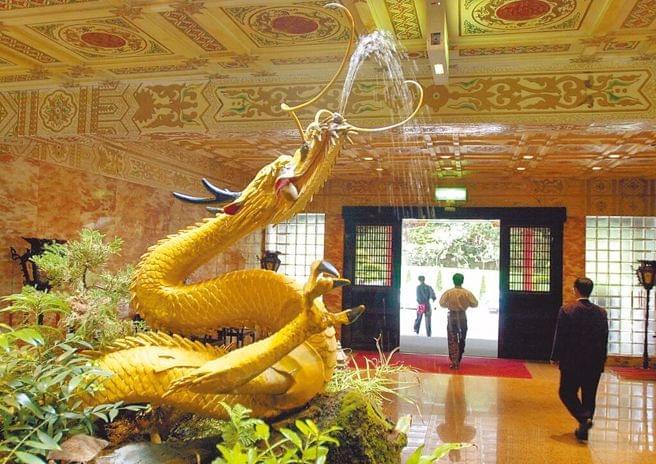
In fact, this dragon was not originally gold; it was made of bronze. Long ago, it was a bronze dragon soaring into the sky, full of aesthetic beauty and spirit. Its fate is a microcosm of this hill's history: severed, repainted, assigned a new political mission, and finally becoming a historical orphan that modern people photograph but rarely understand. To read this dragon, we must turn back time to an era before this hotel existed.
消失的神域:台灣神宮與通往神的道路
在 1945 年以前,你腳下的這塊土地,是全台灣地位最崇高的神域——台灣神宮(Taiwan Grand Shrine)。那是日本殖民政府為了祭祀皇室祖先與領台有功的北白川宮能久親王所建立的最高等級神社。那隻銅龍,當年就優雅地踞坐在神社前的噴水池上,它是這座神域少數倖存至今的遺物。
Before 1945, the ground beneath your feet was the most exalted sacred site in Taiwan—the Taiwan Grand Shrine (Taiwan Jingū). It was the highest-ranking shrine established by the Japanese colonial government to worship the imperial ancestors and Prince Kitashirakawa Yoshihisa. That bronze dragon once sat elegantly on the fountain in front of the shrine. It is one of the few relics of that sacred domain that survives today.
日本人在規劃城市時,展現了極強的儀式感。他們開闢了一條筆直的大道,從總督府(今總統府)一路向北延伸,直通這座神宮。這條路就是今天的中山北路(當時稱為「敕使街道」)。你可以想像,當年的日本高官或皇室成員,就是沿著這條種滿樟樹的大道,一路來到這裡參拜。如今的神宮建築早已在 1944 年的一場飛機失事與大火中燒毀,神明已逝,只留下這條筆直的大道,依然是台北最美麗的林蔭路。
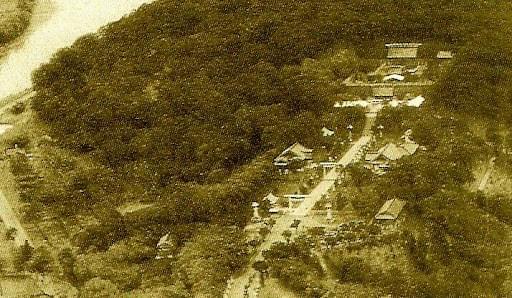
The Japanese demonstrated a strong sense of ritual in urban planning. They opened a straight avenue extending north from the Governor-General's Office (now the Presidential Office) directly to this shrine. This road is today's Zhongshan North Road (then called "Chokushi-dō" or Imperial Envoy Road). You can imagine Japanese high officials or imperial members traveling along this camphor-lined avenue to worship here. The shrine buildings were destroyed in a plane crash and fire in 1944. The deities are gone, leaving only this straight avenue, which remains Taipei's most beautiful tree-lined boulevard.
紅色宮殿的誕生:孔二小姐與她的鐵腕美學
戰後,國民政府撤退來台。為了接待外賓與展現中華文化的正統性,蔣宋美齡女士決定在神宮的廢墟上,建造一座世界最雄偉的中式宮殿飯店——圓山大飯店。而這座飯店真正的靈魂人物,是第一任總經理孔令偉(人稱孔二小姐)。
After the war, the Nationalist government retreated to Taiwan. To host foreign dignitaries and demonstrate the legitimacy of Chinese culture, Madame Chiang Kai-shek decided to build the world's most magnificent Chinese-style palace hotel on the ruins of the shrine—the Grand Hotel. The true soul of this hotel, however, was its first General Manager, Kung Ling-cheng (known as Miss Kung the Second).
孔二小姐是一位極具傳奇色彩的女性,她習慣男裝打扮,行事風格神祕且強悍。據說當年飯店的一磚一瓦、甚至連那隻金龍被漆成金色,都與她的決策有關。現在飯店內還保留著她的故居與辦公室,你可以看到那些充滿個人風格的擺設。她用鐵腕手段,將這裡打造成了一個如同紫禁城般森嚴卻又奢華的「龍宮」。雖然現在看來,圓山的裝潢或許有些老派,甚至帶著一種特定時代的政治審美,但它確實記錄了那個威權時代,對於「國家門面」的極致想像。
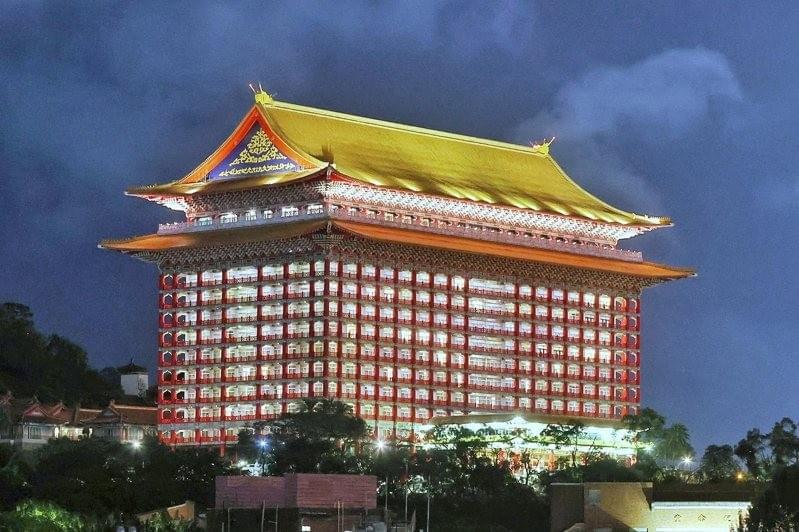
Miss Kung was a legendary figure, known for her habit of dressing in men's clothing and her mysterious, tough management style. It is said that every brick and tile of the hotel, and even the decision to paint the bronze dragon gold, was related to her. The hotel still preserves her residence and office, where you can see furnishings full of her personal style. With an iron fist, she turned this place into a "Dragon Palace," as solemn and luxurious as the Forbidden City. Although the Grand Hotel's decor may seem old-fashioned today, carrying the political aesthetics of a specific era, it truly records the ultimate imagination of "national prestige" during that authoritarian period.
國宴與家鄉味:舌尖上的權力與鄉愁
來到圓山,除了看建築,更要品嚐這裡的「民國滋味」。圓山大飯店是過去幾十年來舉辦國宴的首選之地,這裡的菜單本身就是一部中華民國外交史。但如果不吃大餐,有一個甜點是你絕對不能錯過的——紅豆鬆糕(Red Bean Sponge Cake)。
When you come to the Grand Hotel, beyond admiring the architecture, you must taste the "Flavor of the Republic." For decades, this has been the premier venue for state banquets; the menu itself is a history of ROC diplomacy. But even if you skip the grand feast, there is one dessert you absolutely cannot miss—the Red Bean Sponge Cake.
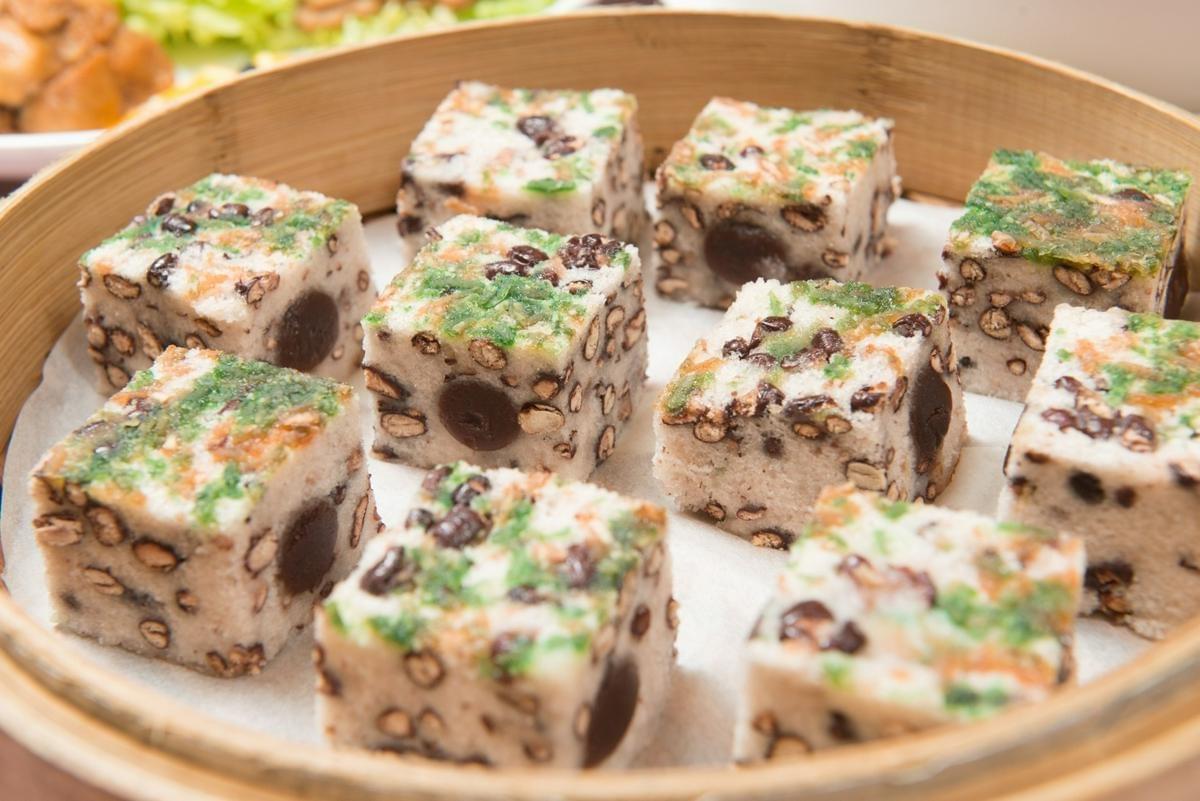
這道點心是蔣宋美齡女士(Madame Chiang Kai-shek)的最愛。這是一種傳統的江浙點心,用再來米粉與糯米粉混合,層層撒入紅豆泥蒸製而成。它的口感非常獨特,不是西式蛋糕的鬆軟,而是一種帶著米香的「鬆、軟、Q、彈」。據說,這道甜點承載了蔣夫人對家鄉的無限鄉愁,甚至在她晚年移居美國時,還會定期請飯店空運這道鬆糕過去。坐在圓苑餐廳裡,點一份紅豆鬆糕配上一壺熱茶,你吃進去的不只是甜點,而是那個大時代流離權貴們對故土的味覺記憶。
This dessert was the favorite of Madame Chiang Kai-shek. It is a traditional treat from the Jiangnan region, made by steaming layers of rice flour and glutinous rice flour mixed with red bean paste. Its texture is unique—not the fluffy softness of Western cakes, but a "loose, soft, chewy, and bouncy" sensation rich in rice aroma. It is said that this dessert carried Madame Chiang's infinite nostalgia for her hometown; even in her later years in the US, she would have the hotel air-freight this cake to her. Sitting in the Yuan Yuan Restaurant, ordering a Red Bean Sponge Cake with a pot of hot tea, you are consuming not just a dessert, but the gustatory memories of the exiled elite longing for their lost land.
山腳下的另一個世界:從美軍俱樂部到美僑協會
有趣的是,當圓山飯店在山頂上展現中華文化的威儀時,山腳下卻是另一個截然不同的世界。位於北安路旁的台北美僑協會(ACC, American Club Taipei),其歷史淵源可以追溯到冷戰時期的美軍設施。
Interestingly, while the Grand Hotel displayed the majesty of Chinese culture at the peak, a completely different world existed at the foot of the hill. The American Club Taipei (ACC), located off Bei'an Road, traces its roots back to Cold War-era US military facilities.
它的前身與著名的「63俱樂部(Club 63)」以及後來的「中國海員俱樂部(China Seas Club)」有著深厚的連結,那是當年駐台美軍與軍眷最主要的社交與休閒中心。在那個年代,這裡是美軍軍官游泳、打網球、享用美式漢堡的租界。隨著 1979 年台美斷交與美軍撤離,這個俱樂部轉型為現在的美僑協會,服務對象從軍人轉變為在台的國際商務人士與外交官。
Its predecessor had deep ties to the famous "Club 63" and later the "China Seas Club," which were the primary social and leisure hubs for US military personnel and their families stationed in Taiwan. In that era, this was a "concession" where officers swam, played tennis, and enjoyed American burgers. With the severance of diplomatic ties in 1979 and the withdrawal of US troops, the club transformed into the current ACC, shifting its clientele from soldiers to international business people and diplomats residing in Taiwan.
這形成了一個極具象徵意義的地理結構,展現了圓山獨特的歷史衝突美學:山上是訴說著中國道統的紅色宮殿,山下則是延續著美式休閒生活的俱樂部,而這一切都坐落在日本人規劃、直通神社的筆直大道(中山北路)軸線上。這三者在圓山這座小山丘上交會,精準地描繪了台灣近代歷史的複雜紋理——我們走在日本人留下的現代化道路上,抬頭仰望中華文化的傳統威儀,同時在生活中擁抱美式的自由與享樂。這是一種多重文化在台灣島嶼上碰撞、堆疊後產生的獨特地景。
This forms a highly symbolic geographical structure, showcasing the unique "aesthetics of conflict" on Yuanshan: On the hill stands the red palace speaking of Chinese orthodoxy; at the foot lies the club extending the American leisure lifestyle; and all of this sits upon the axis of the straight avenue (Zhongshan North Road) planned by the Japanese leading to the shrine. These three elements converge on this small hill, accurately depicting the complex texture of Taiwan's modern history—we walk on the modernized roads left by the Japanese, look up at the traditional majesty of Chinese culture, while embracing American freedom and enjoyment in our daily lives. It is a unique landscape born from the collision and layering of multiple cultures on this island.
密道滑梯:從逃生恐懼到觀光樂趣
圓山大飯店最神祕的傳說,莫過於那兩條「密道」。這兩條建於地下的隧道,配備了全世界最長的磨石子溜滑梯。在那個風聲鶴唳的年代,這是為了讓總統與政要能在緊急時刻迅速逃生而設計的。滑梯的設計是為了方便行動不便的人員(或運送行李)快速滑下,直接通往山下的劍潭公園或北安路,隨時可以換車撤離。
The most mysterious legend of the Grand Hotel is undoubtedly its two "Secret Passages." These underground tunnels are equipped with the world's longest terrazzo slides. In that jittery era, they were designed for the President and dignitaries to escape quickly in emergencies. The slides were intended to allow people with limited mobility (or luggage) to slide down quickly, leading directly to Jiantan Park or Bei'an Road at the foot of the hill for immediate evacuation.
如今,這些曾經被視為最高機密的通道已經對外開放。看著遊客們興奮地在溜滑梯旁拍照,甚至還有人在導覽時發出驚嘆的笑聲,你會感受到台灣社會巨大的轉變。那條曾經乘載著獨裁者恐懼與不安的滑梯,現在成了民主社會中最有趣的觀光亮點。我們不再需要逃生,而是帶著好奇心,走進去窺探那個已經逝去的時代。
Today, these passages, once considered top secret, are open to the public. Watching tourists excitedly taking photos by the slide, sometimes laughing in amazement during tours, you can feel the immense transformation of Taiwanese society. The slide that once carried the fear and insecurity of a dictator has now become a fun highlight in a democratic society. We no longer need to escape; instead, we walk in with curiosity to peek into that bygone era.
CORE 給朋友的深層視角 A Deeper Perspective for Friends
我想和你分享一個心得:圓山不只是一間飯店,它是一個政權更迭的化石。那隻被塗成金色的龍、那條筆直的中山北路、那塊帶著鄉愁的紅豆鬆糕,以及那條原本用來逃命的溜滑梯,都在訴說著同一個故事——這座島嶼的主人換了又換,每個政權都試圖在這座山丘上留下自己的印記。作為朋友,我建議你在參觀完金碧輝煌的大廳後,走到戶外,看著山下的車水馬龍。你會發現,曾經高高在上的權力象徵,如今已成為我們茶餘飯後的歷史故事,這或許就是時間給予台灣最溫柔的解答。
I want to share a thought with you: The Grand Hotel is not just a hotel; it is a fossil of regime change. The dragon painted gold, the straight Zhongshan North Road, the nostalgic red bean sponge cake, and the slide originally meant for escaping with one's life—they all tell the same story: the masters of this island have changed time and again, each regime trying to leave its mark on this hill. As a friend, I suggest that after visiting the magnificent lobby, you step outside and look at the traffic flowing below. You will realize that the once-lofty symbols of power have now become historical anecdotes for our casual conversation. Perhaps this is the gentlest answer time has given to Taiwan.